



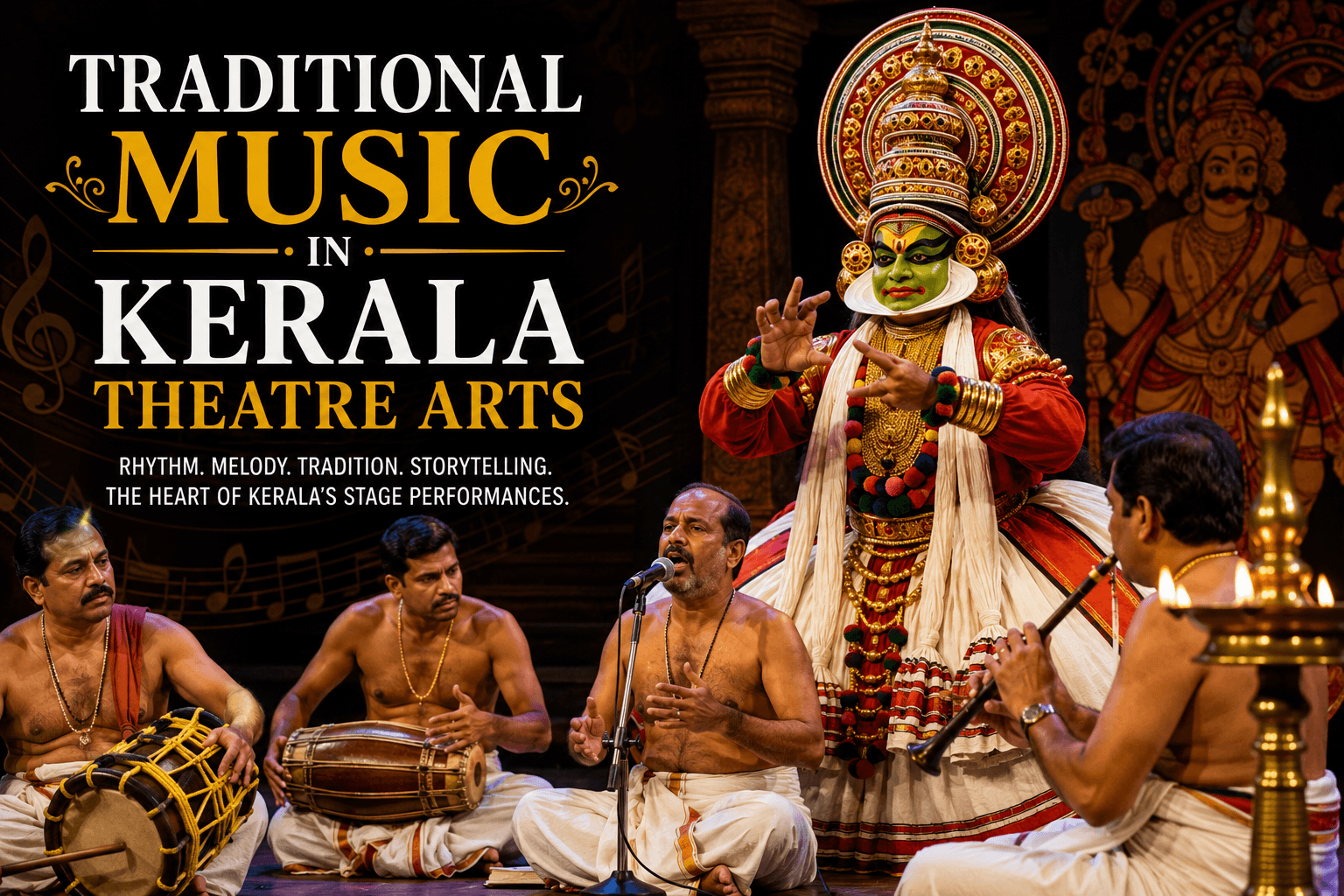
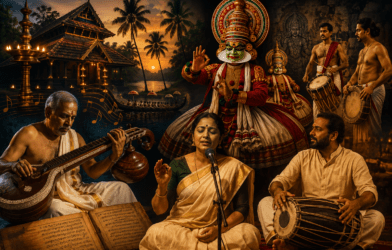
Traditional music plays a vital role in Kerala theatre arts, adding emotion, rhythm, cultural identity, and storytelling depth to stage performances. Kerala’s rich theatrical traditions are closely connected with classical music, folk melodies, percussion instruments, and devotional songs that have been passed down through generations.
From ancient temple performances to modern stage dramas, music has always been an essential element of Kerala theatre culture. In this blog, we explore the importance of traditional music in Kerala theatre arts, its history, instruments, performance styles, and influence on modern theatre.
Importance of Music in Kerala Theatre Arts
Music is one of the strongest elements in Kerala’s traditional theatre performances. It helps create atmosphere, express emotions, and connect audiences with the story.
Why Traditional Music Matters in Theatre
- Enhances storytelling
- Builds emotional connection
- Supports dramatic expression
- Creates cultural identity
- Improves stage atmosphere
- Adds rhythm and energy
Traditional theatre music transforms stage performances into immersive cultural experiences.
History of Traditional Theatre Music in Kerala
Kerala has a long history of combining music, dance, and drama in temple arts and folk performances. Many traditional art forms evolved with strong musical foundations.
Historical Influences
- Temple rituals
- Sanskrit theatre traditions
- Folk performance culture
- Devotional music
- Classical Carnatic influence
Traditional music became deeply connected with Kerala’s storytelling and performance arts.
Traditional Theatre Art Forms in Kerala
Several famous Kerala art forms rely heavily on music and live orchestration.
Kathakali
Kathakali is one of Kerala’s most iconic theatre traditions. Music plays a major role in expressing emotions and supporting dramatic storytelling.
Musical Features:
- Classical ragas
- Powerful percussion
- Vocal storytelling
- Rhythmic coordination
The singers and musicians guide the emotional flow of the performance.
Koodiyattam
Koodiyattam is one of the oldest surviving theatre traditions in India.
Importance of Music in Koodiyattam:
- Slow rhythmic patterns
- Traditional percussion
- Sanskrit chants
- Emotional narration
Music creates a spiritual and dramatic atmosphere during performances.
Ottamthullal
Ottamthullal combines humor, storytelling, and music in a highly entertaining format.
Musical Elements:
- Fast-paced songs
- Rhythmic narration
- Folk-style singing
- Percussion accompaniment
The lively music keeps audiences engaged throughout the performance.
Traditional Musical Instruments Used in Kerala Theatre
Kerala theatre arts use a variety of traditional instruments to create rhythm and dramatic intensity.
Chenda
Chenda is one of the most famous percussion instruments in Kerala theatre.
Features:
- Powerful sound
- Dramatic rhythm
- Used in temple arts and theatre
It is widely used in Kathakali and festival performances.
Maddalam
Maddalam provides deep rhythmic support during stage performances.
Role in Theatre:
- Supports dramatic scenes
- Enhances emotional impact
- Maintains performance rhythm
Idakka
Idakka is known for its soft and expressive sound.
Unique Features:
- Flexible pitch control
- Emotional musical expression
- Used in temple and theatre music
Kuzhal
Kuzhal adds energy and ceremonial atmosphere to theatre performances.
Role of Vocal Music in Theatre
Traditional theatre performances often include live singers who narrate the story and guide performers emotionally.
Functions of Vocal Music
- Story narration
- Emotional expression
- Character introduction
- Scene transitions
Live singing remains a defining feature of Kerala’s classical theatre arts.
Folk Music in Kerala Theatre
Folk theatre performances in Kerala use regional songs and village-style music traditions.
Features of Folk Theatre Music
- Simple melodies
- Local language lyrics
- Community participation
- Rhythmic percussion
Folk music keeps traditional storytelling alive in rural communities.
Connection Between Dance and Music
In Kerala theatre arts, dance and music work together closely.
Importance of Rhythm
- Synchronizes movement
- Enhances expressions
- Maintains dramatic timing
- Improves audience engagement
Musicians and performers often work together live during stage shows.
Traditional Theatre Music and Spirituality
Many Kerala theatre traditions originated in temples and religious rituals.
Spiritual Influence in Theatre Music
- Devotional songs
- Sacred rhythms
- Ritual performances
- Temple traditions
Music helps create a spiritual atmosphere during performances.
Modern Influence on Traditional Theatre Music
Modern theatre productions often combine traditional Kerala music with contemporary sounds.
New Trends in Theatre Music
- Fusion orchestration
- Digital sound support
- Modern stage production
- Experimental musical theatre
These innovations help attract younger audiences while preserving tradition.
Challenges in Preserving Traditional Music
Traditional theatre music faces challenges due to changing entertainment habits and reduced audience attention toward classical arts.
Common Challenges
- Declining interest among youth
- Commercial entertainment growth
- Limited funding
- Fewer traditional artists
Cultural organizations and artists continue working to preserve Kerala’s musical heritage.
Importance of Supporting Kerala Theatre Arts
Supporting theatre and traditional music helps preserve Kerala’s rich cultural identity.
Ways to Support Traditional Arts
- Attend live performances
- Support local artists
- Encourage cultural education
- Promote theatre festivals
Public support is essential for keeping traditional art forms alive.
Popular Theatre Festivals in Kerala
Several cultural festivals showcase traditional theatre music and stage arts.
Famous Events Include:
- Temple festivals
- Kathakali festivals
- Cultural fairs
- Folk art festivals
- Classical theatre events
These festivals attract artists and audiences from across Kerala.
Future of Traditional Music in Kerala Theatre
Despite modernization, traditional theatre music continues to remain an important part of Kerala culture.
Future Possibilities
- Digital archiving
- Global cultural promotion
- Youth theatre programs
- International collaborations
Traditional music is expected to evolve while preserving its cultural roots.
Final Thoughts
Traditional music in Kerala theatre arts is more than entertainment — it is a powerful cultural expression that connects storytelling, spirituality, rhythm, and emotion. From the powerful beats of the Chenda to the emotional vocal storytelling of Kathakali, music continues to shape the identity of Kerala’s theatre traditions.
Preserving and supporting these traditional art forms ensures that future generations can continue experiencing the beauty and richness of Kerala’s cultural heritage.


Comments are closed